A buyer may spend hours learning a collection, while a colleague arriving for the afternoon shift sees only a rail of unfamiliar garments. A short team briefing should close that gap: what has arrived, whom it may suit, which details matter and where to find an answer when a customer asks something specific.
Use this suggested fifteen-minute format for a small launch edit. It is a practical agenda, not a promise that every collection can be learned in fifteen minutes. Larger deliveries need several focused sessions. The aim is to make the team ready to start useful conversations and recognise what still needs checking.
Prepare three pieces and one reliable reference
Choose three representative items before the briefing: a piece that introduces the collection, an easy outfit partner and an item with a detail that needs demonstrating. Bring the actual products, their labels and the approved product information. A campaign image can show a styling idea, but it cannot confirm composition, care instructions or current stock.
Prepare one shared reference card for the edit. Keep it accessible at the till or in the team's usual digital workspace. Give it an owner and an update date so a later shift knows which version to use. Leave unanswered questions visibly marked as pending.
| Card field | Useful content |
|---|---|
| Product identity | Style name, reference, colour and the matching product image. |
| Verified facts | Composition, care instructions, included accessories and confirmed fit information. |
| Styling idea | One outfit using pieces the shop currently carries, clearly presented as a suggestion. |
| Stock lookup | Where to check live size availability, reservations and other locations. |
| Open question | What needs confirming, who will ask and where the answer will be recorded. |
Link to live stock rather than copying quantities onto a card that can become outdated during the day. Keep confidential buying costs and commercial terms out of any reference that customers might see.
Minutes 0–3: explain the role of the edit
Begin with the customer need the selection addresses. For example, a hypothetical edit might help someone find a distinctive outfit for a daytime event, with separates that can be worn again. That gives the team a starting question: “What sort of occasion are you dressing for?”
Point out the visual connection between the pieces: a shared colour, a repeated texture or a complementary silhouette. Avoid a long design speech that colleagues must memorise. Ask each person to identify one visible detail they could naturally explain to a customer.
Separate observation from brand history. “These pieces share a blue accent” is something the team can see. A claim about a designer's inspiration needs an approved source. If the background story is unavailable, describe the clothes accurately and let the customer respond.
Minutes 3–7: demonstrate the details
Handle the chosen items together. Show how a fastening opens, whether a belt is included, where a pocket sits or how a detachable element connects. Do not force a closure or use a display sample to demonstrate a care technique that has not been approved for it.
- Read before describing: check the composition and care label instead of guessing from the feel of the fabric.
- Be precise about fit: identify the sample size and use verified measurements or documented observations. Do not turn one colleague's fitting experience into a universal size recommendation.
- Check the complete item: distinguish included accessories from pieces added only for styling.
- Name the limit: if a feature or instruction is unclear, record the question for follow-up.
Give colleagues time to find the same information themselves. Knowing where the answer lives is more useful than remembering a detail incorrectly.
Minutes 7–10: build one outfit and one alternative
Show one complete combination using available stock. Then change one element to suit a different preference: swap the lower half, choose a quieter accessory or add a layer. Explain the choice in ordinary language, such as a colour connection or a change in proportion.
Ask a colleague to suggest an alternative. This checks whether the team understands the idea well enough to adapt it, rather than simply repeat the display. Keep the customer's preferences central; a suggested combination is an invitation to try something, not a requirement to buy several pieces.
Check availability before recommending a specific size or colour. If the outfit on display cannot be supplied as shown, agree which available alternative the team can offer and update the display information.
Minutes 10–13: practise a customer conversation
Work in pairs for one short exchange. One person plays a customer with a practical question; the other responds using the products and reference card. Choose a question that requires a useful answer rather than a sales slogan.
- “I like this, but I would prefer more coverage. What could I try with it?”
- “Is the necklace part of the outfit, or is it sold separately?”
- “How should I care for this piece?”
- “Can you check whether the other colour is available in my size?”
If an answer is uncertain, practise saying so: “Let me check the product information before I advise you.” Then actually locate the source or assign the question to someone who can confirm it. The exercise should make checking feel normal.
Minutes 13–15: check understanding and hand over
Ask each colleague to explain one product detail in their own words and show where they would check a fact they do not remember. Correct inaccuracies immediately and add unresolved questions to the shared card. Keep the check supportive: the purpose is to catch gaps before a customer encounters them.
Finish by naming who will brief absent colleagues and who will update the reference after receiving answers. For later shifts, leave the same three example pieces identified and a short recap of the decisions, rather than an unexplained photograph of a rail.
Use the first week to improve the briefing
Collect repeated questions without recording personal customer information. Note the product reference, the question and whether the team found a confirmed answer. A recurring uncertainty about a fastening may need a demonstration; a repeated request for styling alternatives may need another outfit example.
Share concise product questions with the relevant brand contact or agent. Once an answer is confirmed, update the reference and tell the team what changed. Do not replace a verified fact with an anecdote simply because it sounds more persuasive.
If you are exploring a Be Sunset assortment, apply for wholesale access. When discussing your selection, ask which approved product information and imagery are available to help your shop team introduce the pieces accurately.
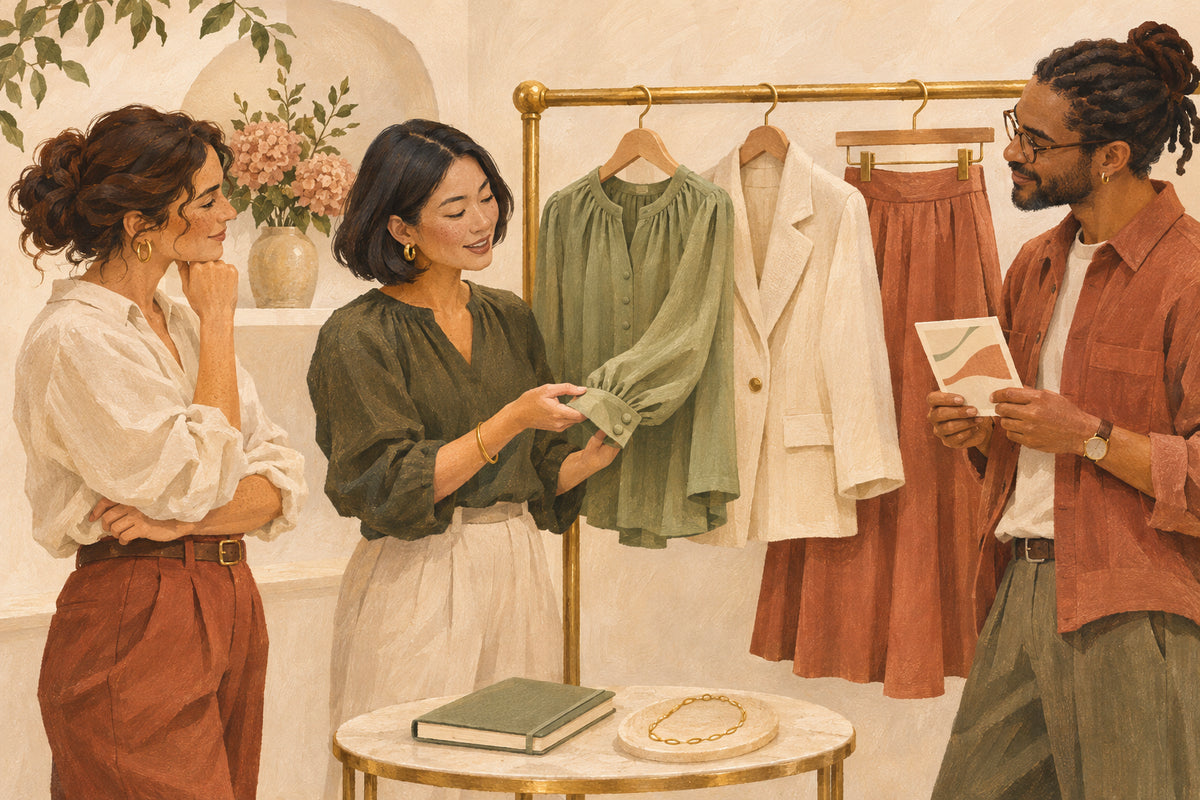
Header illustration created for this guide; it depicts a generic boutique team briefing, not Be Sunset staff, premises or catalogue products.