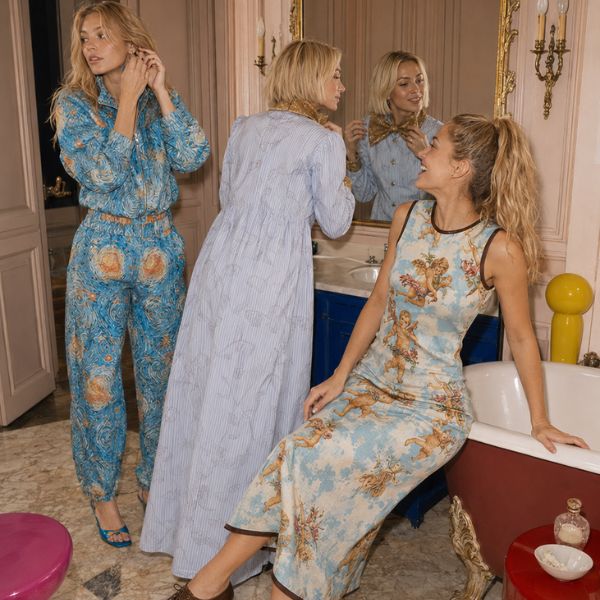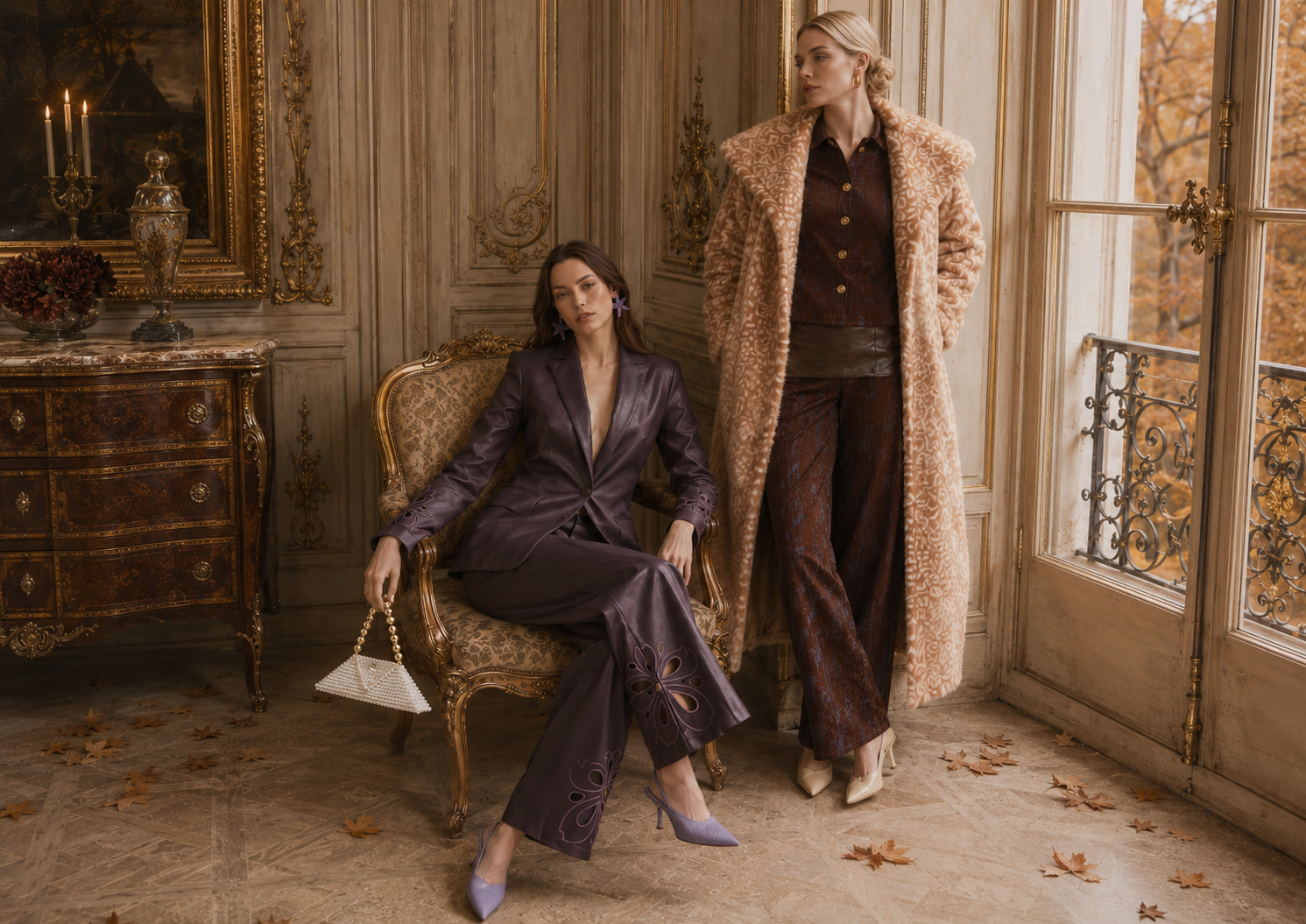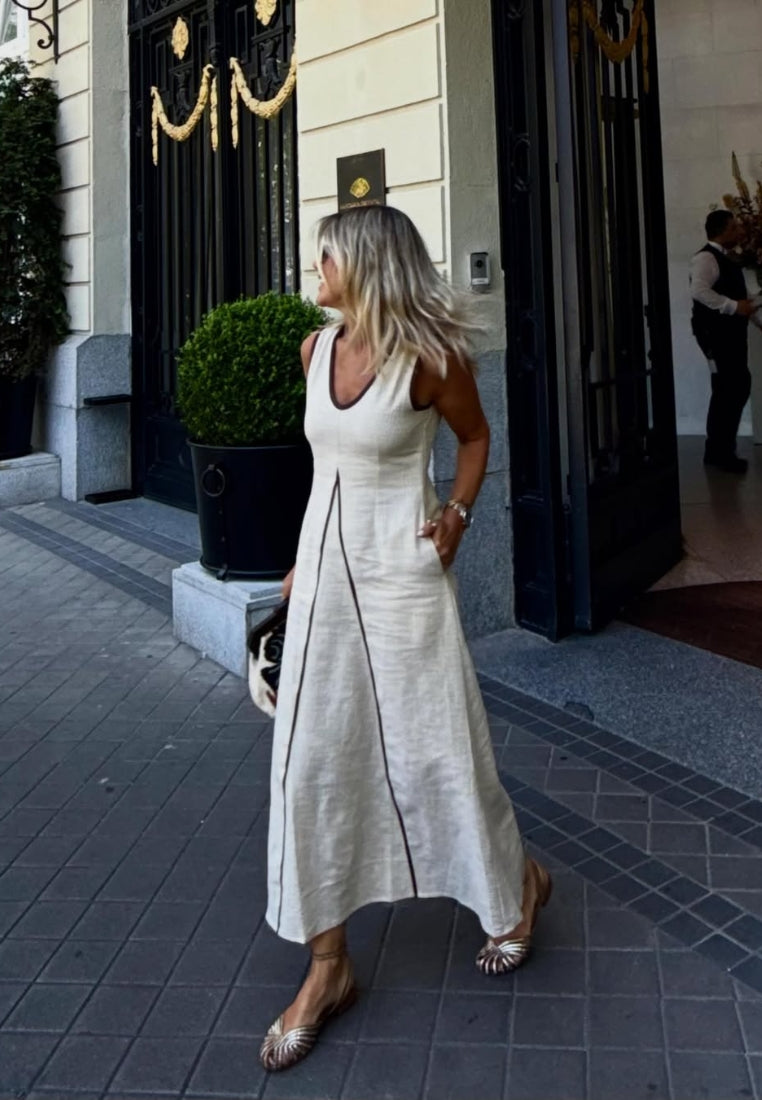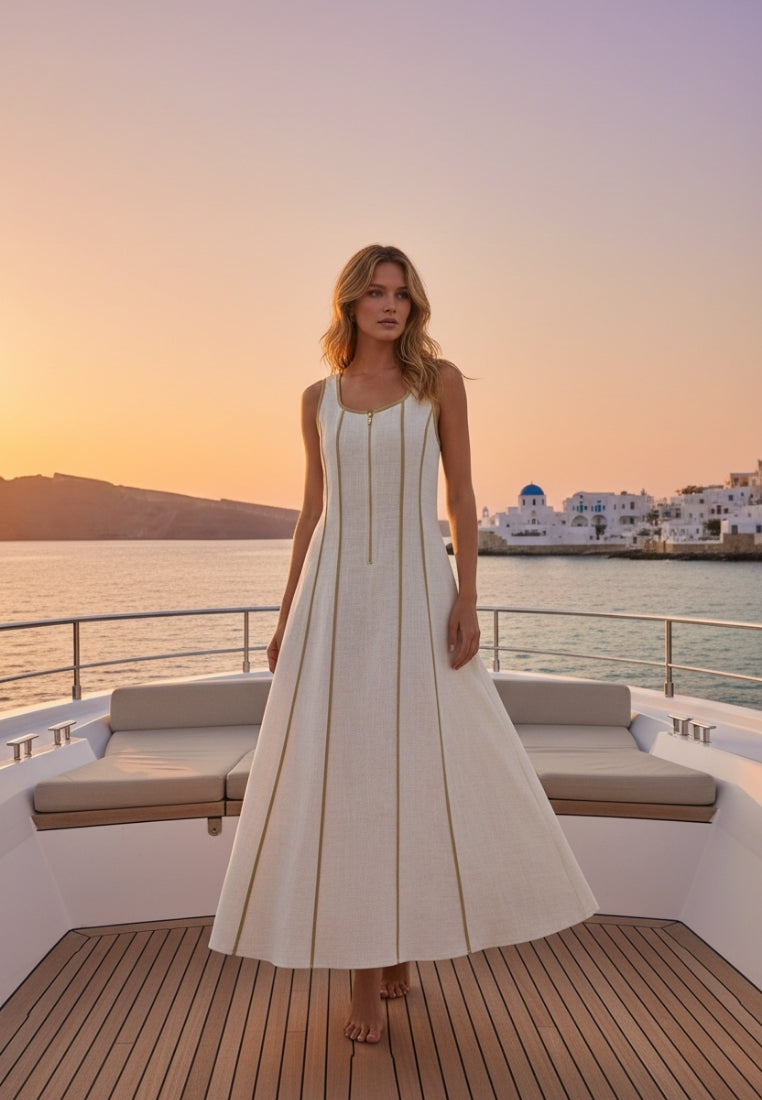
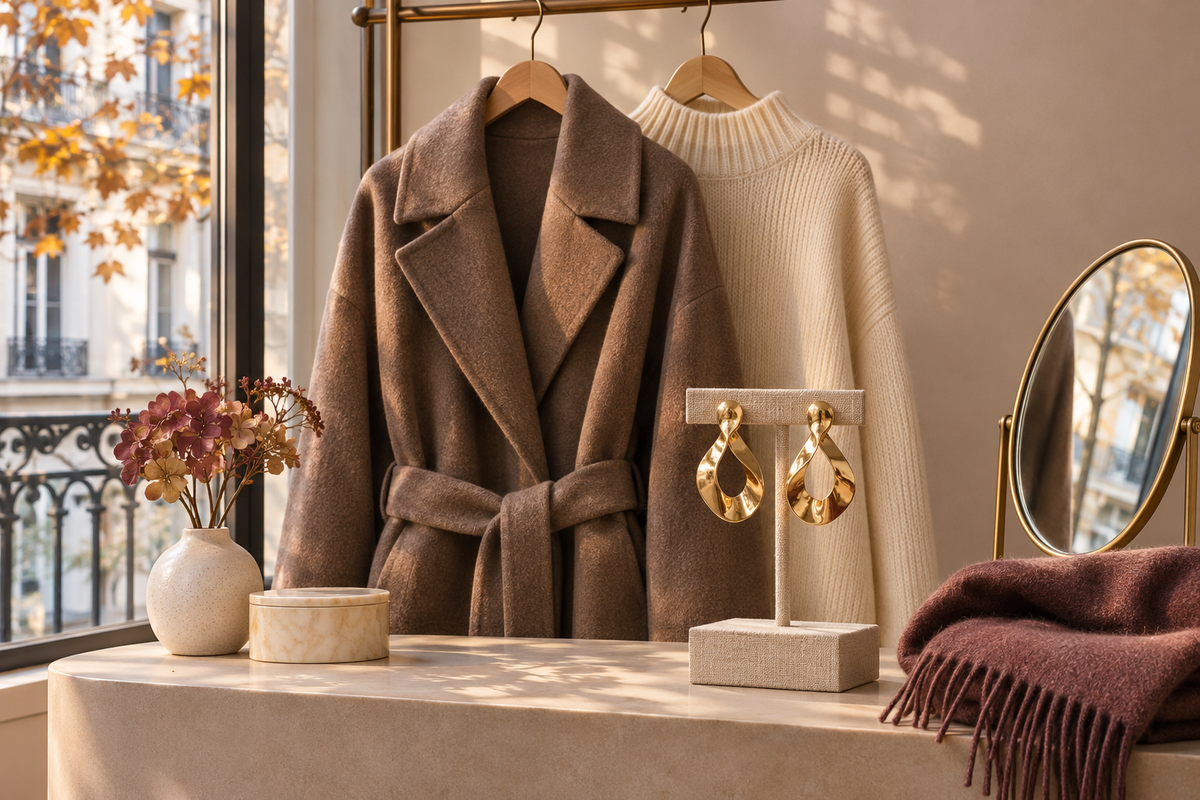
In colder months, jewellery has to work with collars, knits and outerwear rather than with a bare neckline alone. A pair of earrings can disappear beside a bulky scarf; a necklace can catch on a high neck; too many focal pieces can make a considered outfit feel busy. These are practical styling problems a boutique can solve at the rail and in the fitting room.
Choose the focal point before adding an accessory
Start with the garment the customer came to see. If its print, embroidery or unusual cut is the main event, try one clear jewellery accent. If the clothing is quiet, a more expressive piece can provide the focal point. This is a decision about visual balance, not a rule that statement jewellery only belongs with plain clothes.
Ask the customer which part of the outfit they want people to notice first. Then put on one accessory and step back to a normal conversation distance. If both the garment and jewellery compete for attention, remove one piece or choose a smaller scale.
Check the neckline and the layers together
| What the customer is wearing | First combination to try | What to check in the mirror |
|---|---|---|
| High-neck knit or closed shirt | Visible earrings, with no necklace at first | Do the earrings remain visible beside the hair and collar? |
| Open shirt or V neckline | A necklace that sits in the open space, or earrings alone | Does the necklace stay clear of buttons and the shirt edge? |
| Printed blouse under a coat | One metal tone that picks up a colour or detail in the print | Does the look still work when the coat is taken off? |
| Soft scarf or textured collar | Earrings or a ring before a necklace | Will fabric cover, rub against or catch on the jewellery? |
Try the complete outfit in the order the customer will wear it outdoors. Put on the coat and scarf, then remove them. The jewellery should make sense in both versions. This quick check catches combinations that look good on a hanger but fail in use.
Build three looks from one garment
A small styling exercise helps a team show choice without filling a rail with unrelated pieces. Select one garment and prepare three distinct combinations:
- Everyday: keep the jewellery light enough for a commute or a long working day.
- Evening: change one accessory, such as the earrings, while keeping the garment and most of the outfit the same.
- Layered: add the coat or scarf the customer is likely to wear and check that the jewellery is still visible and comfortable.
Photograph the three looks for the team’s own reference, with the product names beside each image. A colleague who did not build the display can then recreate the outfit or offer a substitute when a piece sells out.
Make the suggestion easy to try, not compulsory
Keep a small, deliberate jewellery selection near the fitting room or the garments it complements. A mirror, clear product identification and enough room to handle each piece are more useful than a crowded tray. When a customer tries on an outfit, offer one relevant option: “Would you like to see how this looks with earrings that stay visible above the collar?” It gives a reason for the suggestion and leaves the customer in control.
After a few selling days, note which pairings customers actually tried, which they bought, and which they declined. A display that attracts attention but produces no try-ons may need a different garment or a clearer place to stand and look. Keep those observations specific to the outfit; a broad assumption that “jewellery doesn’t sell with coats” is rarely useful.
If you are planning a coordinated apparel and jewellery assortment for your boutique, start with the Be Sunset wholesale application and tell our team which outfit combinations you want to build.